Tel: +86-20-3106 0625 Email: sales@motechmotor.com

Your location:Home >> APPLICATIONS >> Selection Guide
Selection Guide
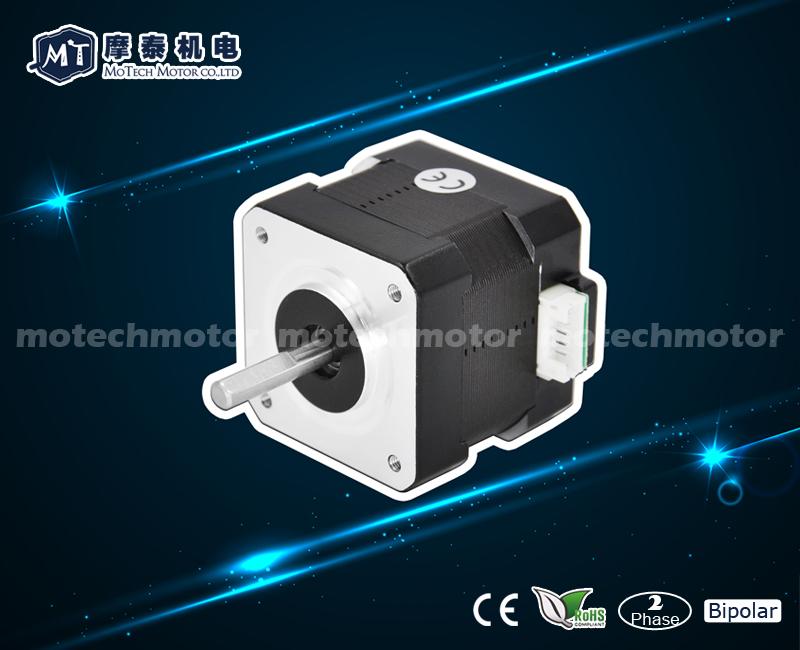
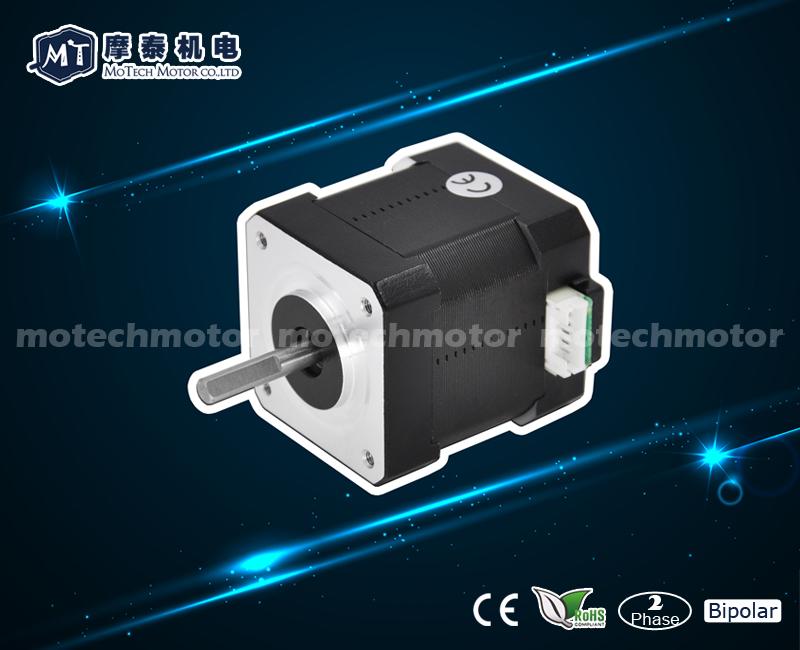
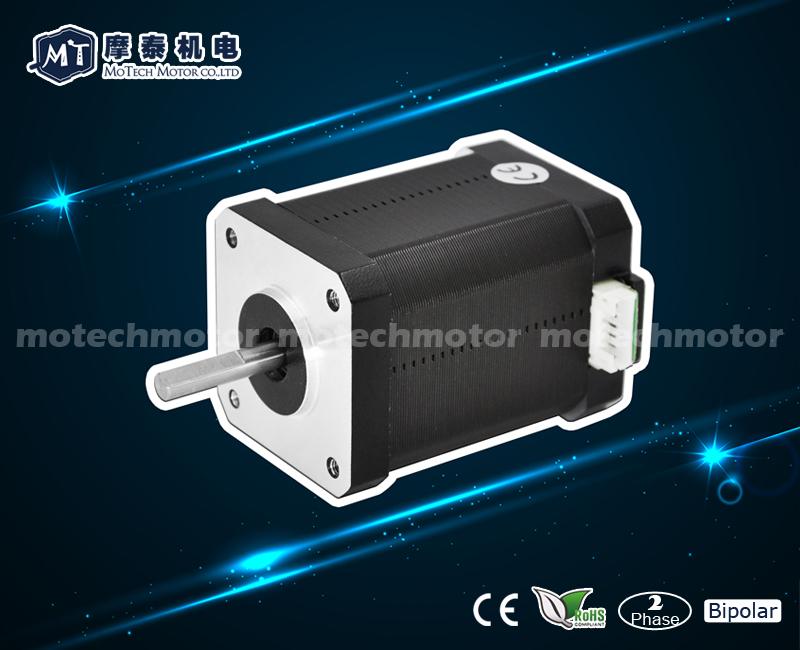
A stepper motor is an actuator that converts electrical pulses into angular or linear displacement. When a stepper driver receives a pulse signal, it drives the stepper motor to rotate by a fixed angle in the specified direction. This angle is called the “step angle,” and the motor rotates step by step in fixed angular increments.
Typically, a motor is provided with a specified step angle value. For example, the MT-1704HSM168A item has a step angle of 0.9°, while the MT-1704HS168A item has a step angle of 1.8°. This step angle can be called the "motor's inherent step angle," but in practical applications, the actual step angle does not necessarily equal the inherent step angle. In actual operation, smaller step angle can be achieved through driver microstepping, thereby improving accuracy and reducing vibration and noise.
The
motor's step angle depends on the load accuracy requirements. The minimum
resolution of the load (equivalent
value) is converted to the resolution of the motor shaft, determining how many
angles (including reduction angles) are needed for each equivalent motor. The
motor's step angle should be equal to or less than this angle. Common stepper
motor step angles on the market include 0.36°/0.72° (five-phase motor),
0.9°/1.8° (two-phase and four-phase motor), 1.5°/3° (three-phase motor), etc.
How
to Choose a Step Angle?
1. Control Precision Requirements
When the system requires high-precision positioning (such as precision CNC machine tools), a motor with a smaller step angle should be selected. A smaller step angle means a finer rotation angle corresponding to each pulse, enabling more precise position adjustments and meeting millimeter-level or even micrometer-level machining requirements.
2. Load Characteristics
For applications with large load inertia (such as heavy-duty robotic arms in automated production lines), a small step angle motor is recommended. These motors start and run more smoothly, reducing vibration or step loss caused by inertial impact and ensuring stability of the loaded motion.
3. Operating Speed
For scenarios with high speed requirements (such as high-speed conveying and sorting equipment), a large step angle motor is more suitable. At the same pulse frequency, a large step angle rotates a larger physical angle per unit time, achieving a faster overall speed. However, it should be noted that accuracy may decrease accordingly.
4. System Cost
From a cost perspective, small step angle motors are usually more expensive due to their complex design and high-precision materials. If the application does not require high accuracy (such as the coarse positioning in packaging machinery), choosing a large step angle motor can significantly reduce procurement costs while still meeting the requirements.
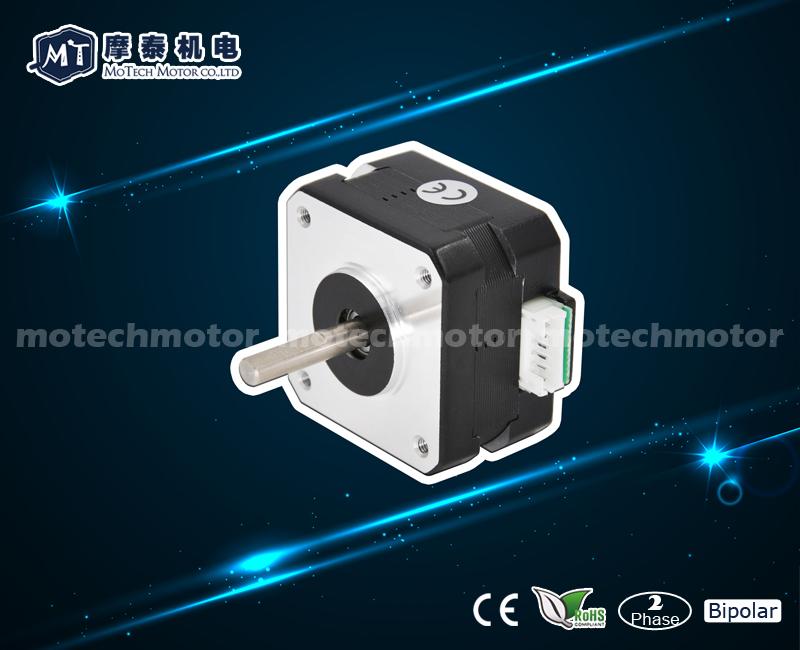
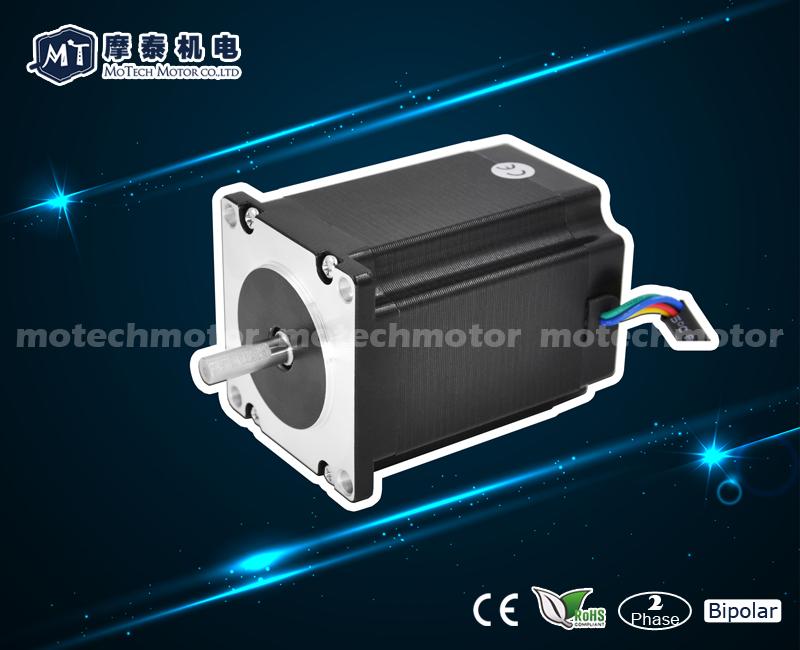
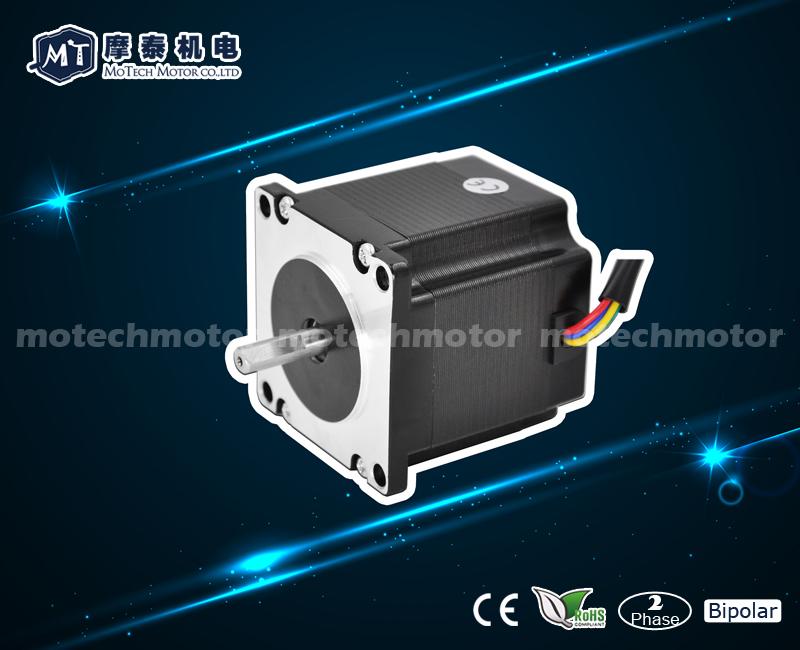
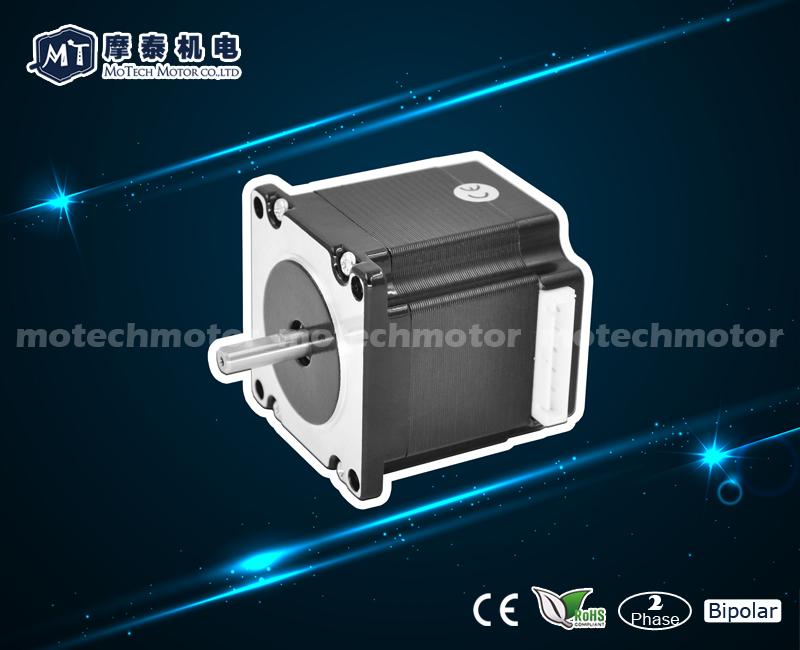
For more detailed information about 0.9°/1.2°/1.8° Nema 14/17/23 stepper motors, please click the link below.
https://www.motechmotor.com/products.aspx?code=01


Scan QRCode
Follow Stepper Motors, Step-Servo Motors, Stepper Drivers News
 Tel: +86-20-31060625
 Fax: +86-20-31060635
 Email:sales@motechmotor.com
 Add.:Block 15th, Tian An Hi-tech Ecologocal Park, No.555, Panyu Avenue North, Panyu distrct, Guangzhou, China (511400)