Tel: +86-20-3106 0625 Email: sales@motechmotor.com

Your location:Home >> SUPPORT >> Knowledge Base
Knowledge Base
To select the ideal stepper motor for your application, it's crucial to grasp fundamental parameters and their meanings, such as holding torque, driving voltage, current, number of phases, flange size, motor length, shaft length, and wiring method. Additionally, consider the motor's operating environment, including factors like ambient temperature and humidity.
**Holding torque**
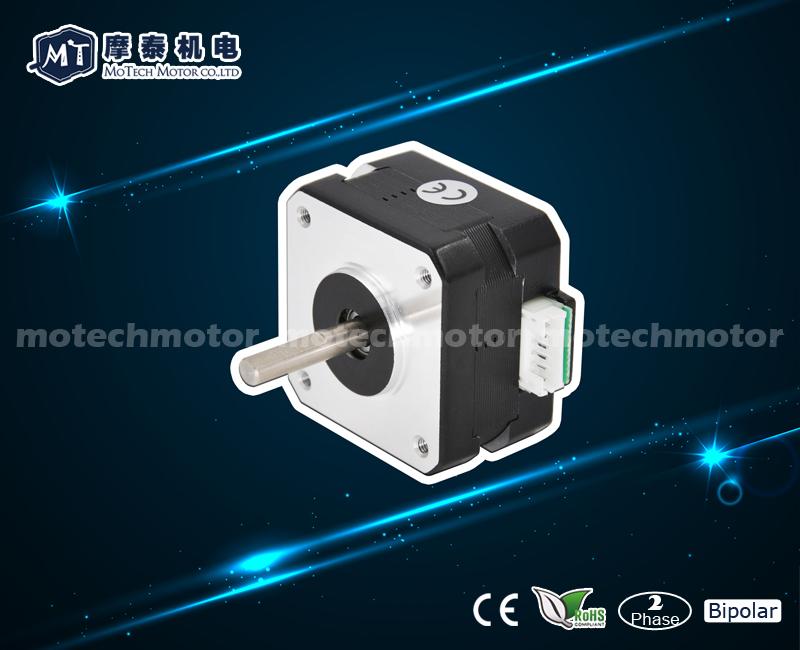
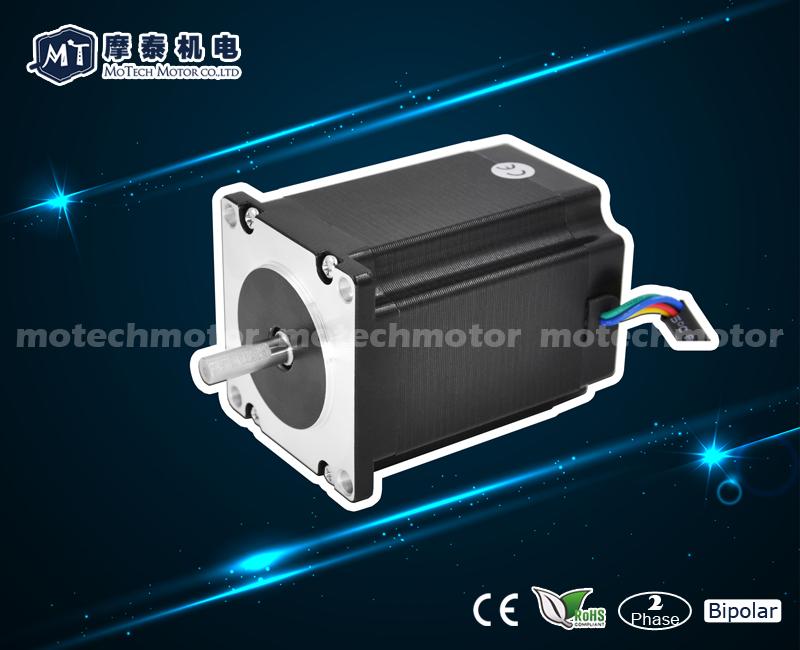
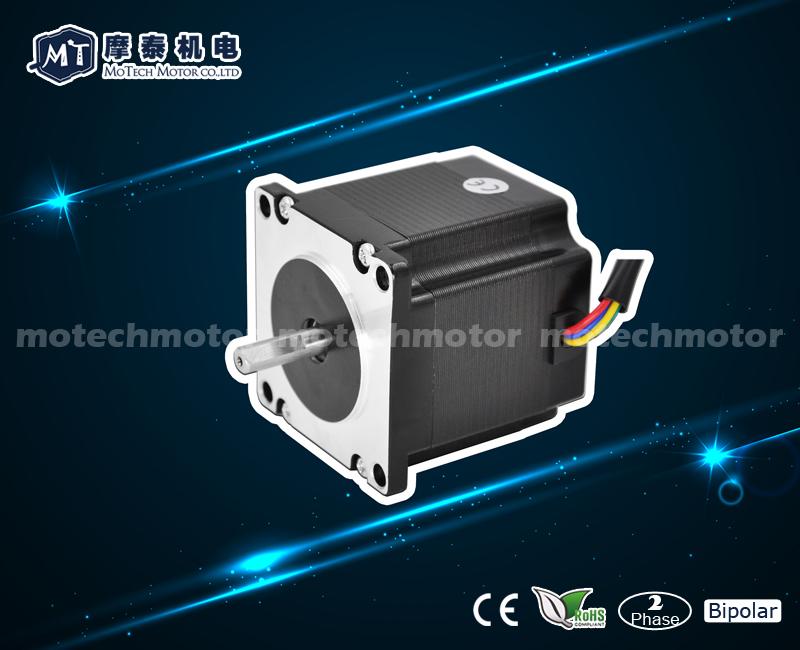
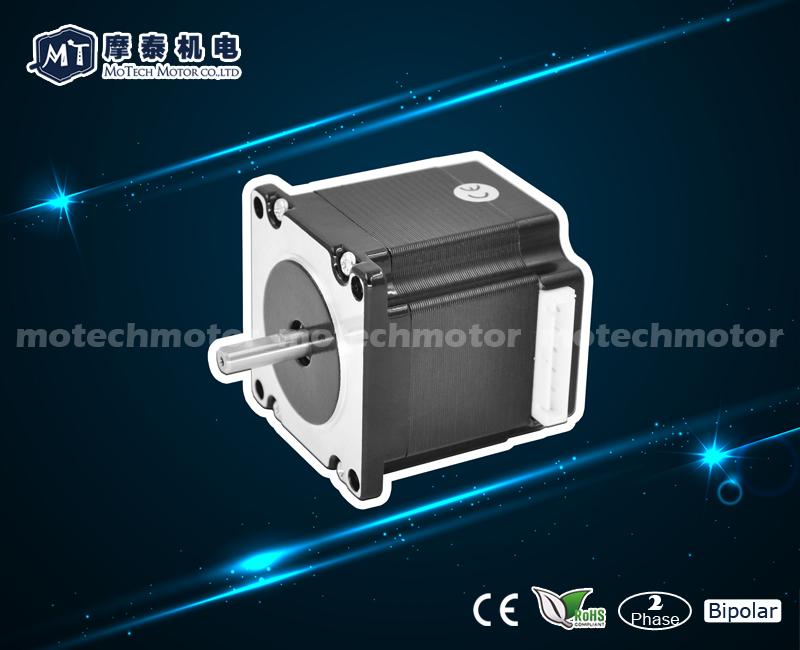
Holding torque represents the torque required to move a stepper motor one full step while the windings are energized and the rotor remains stationary. Choosing an appropriate motor model often depends on the required torque. In general, if the torque falls below 8 kg.cm, consider NEMA8-NEMA17 sizes. For torque in the range of 8-30 kg.cm, NEMA23 or NEMA24 motors are more suitable. When torque exceeds 30 kg.cm, opt for a stepper motor with NEMA34, NEMA42, or other specifications.

**Torque frequency characteristics**
Torque frequency characteristics describe the relationship between stepper motor speed and input voltage frequency. With consistent voltage and magnetic flux conditions, as the frequency increases, the motor's speed also rises. However, the motor's output torque decreases as speed increases. At low speeds (a few hundred revolutions per minute or lower), stepper motors offer relatively high torque, close to the holding torque. As speed exceeds 1000 rpm, torque diminishes significantly. Consequently, it's advisable to maintain stepper motor speeds between 300 to 600 revolutions per minute for most applications. High-speed motor requirements necessitate careful consideration of factors like driving voltage, coil resistance, and inductance.

**Phase**
The number of phases in a stepper motor refers to the quantity of coils within it, typically categorized as two phases, three phases, or five phases. These phases offer step angles of 0.9° or 1.8° for two-phase motors, 1.2° for three-phase motors, and 0.72° for five-phase motors. Smaller step angles lead to smoother motor operation, making two-phase motors the more commonly used option.
**Usage environment**
Consider the specific operating conditions of your stepper motor. Specialized high-temperature, humid, underwater, or waterproof motors may be required for challenging environments.
**Customized services**
If your application demands specific parameters like output shaft length, flat position, diameter, and wire sequence, reach out to our sales engineers for tailored stepper motor solutions.


Scan QRCode
Follow Stepper Motors, Step-Servo Motors, Stepper Drivers News
 Tel: +86-20-31060625
 Fax: +86-20-31060635
 Email:sales@motechmotor.com
 Add.:Block 15th, Tian An Hi-tech Ecologocal Park, No.555, Panyu Avenue North, Panyu distrct, Guangzhou, China (511400)