Tel: +86-20-3106 0625 Email: sales@motechmotor.com

Your location:Home >> APPLICATIONS >> Applications
ApplicationsMedical equipment requires motion systems that are accurate, stable, and dependable. From diagnostic instruments to infusion systems, every moving component must operate with consistent precision. In many of these applications, stepper motors are a practical and cost-effective choice.
Stepper motors are widely used in medical devices because they offer precise position control, repeatability, and smooth integration with digital control systems. For equipment manufacturers, they provide a reliable motion solution that supports both performance and design flexibility.
Why Stepper Motors Are Used in Medical Equipment
A stepper motor moves in fixed increments, making it well suited for applications that require controlled positioning and repeatable motion. Unlike some other motor types, stepper motors can deliver accurate movement without requiring complex feedback systems in many designs.
This makes them especially useful in medical equipment where engineers need:
> precise positioning
> stable speed control
> repeatable linear or rotary motion
> compact design integration
> cost-effective motion control
In healthcare devices, even small motion errors can affect dosing accuracy, sample handling, fluid delivery, or testing consistency. That is why motion control components must be selected carefully.
Common Applications of Stepper Motors in Medical Devices
Stepper motors can be found in a wide range of medical and laboratory systems. Their versatility makes them suitable for both compact portable devices and larger automated platforms.
1. Infusion Pumps and Syringe Pumps
Infusion systems rely on precise fluid delivery. Stepper motors help control plunger movement or pumping mechanisms with high accuracy, which is essential for safe and stable dosing.
In these applications, smooth motion, low noise, and consistent torque are especially important.
2. Diagnostic and Analytical Equipment
Medical analyzers often require controlled movement for sample transport, reagent dispensing, valve actuation, or optical positioning. Stepper motors are commonly used because they support precise repeated cycles over long operating periods.
Examples include:
> blood analyzers
> biochemical analyzers
> immunoassay systems
> PCR and laboratory automation equipment
3. Imaging and Scanning Systems
Certain imaging or scanning devices use stepper motors for positioning, indexing, and controlled movement of internal components. Accuracy and repeatability are critical to maintaining system quality and measurement consistency.
4. Respiratory and Therapy Devices
Medical equipment such as ventilators, therapy systems, and automated treatment devices may use stepper motors to control valves, flow mechanisms, or adjustment systems. Stable motion and dependable operation are essential in these applications.
5. Hospital Automation and Support Equipment
Stepper motors are also used in hospital support systems, such as automated dispensers, medical packaging devices, and some robotic or assistive mechanisms where controlled movement is needed.
Key Performance Requirements for Medical Stepper Motors
Not every standard motor is suitable for medical equipment. Medical applications usually require a higher level of consistency, design control, and product reliability.
When selecting a stepper motor for medical equipment, manufacturers typically focus on the following factors.
Precision and Repeatability
Medical systems often perform the same motion cycle thousands of times. A suitable motor should provide reliable step accuracy and repeatable performance under normal operating conditions.
Low Noise and Smooth Operation
Noise control is important in many healthcare environments, especially for bedside equipment, laboratory devices, and patient-facing systems. Smooth motor operation can also improve the overall quality of the equipment.
Compact Size
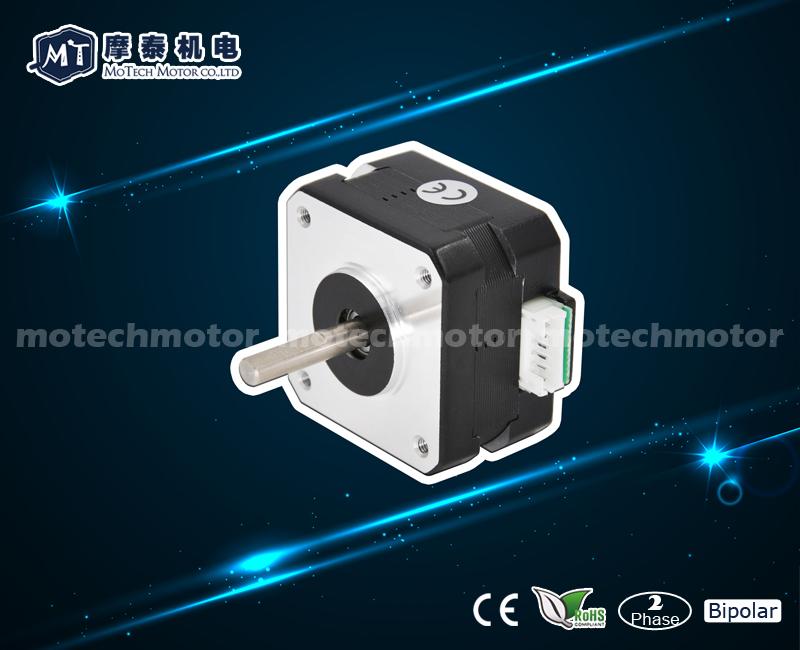
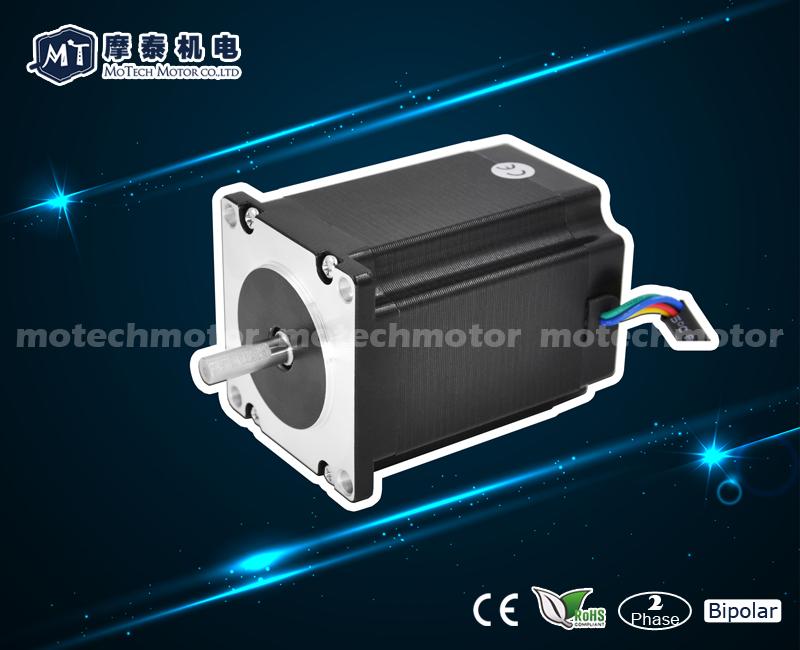
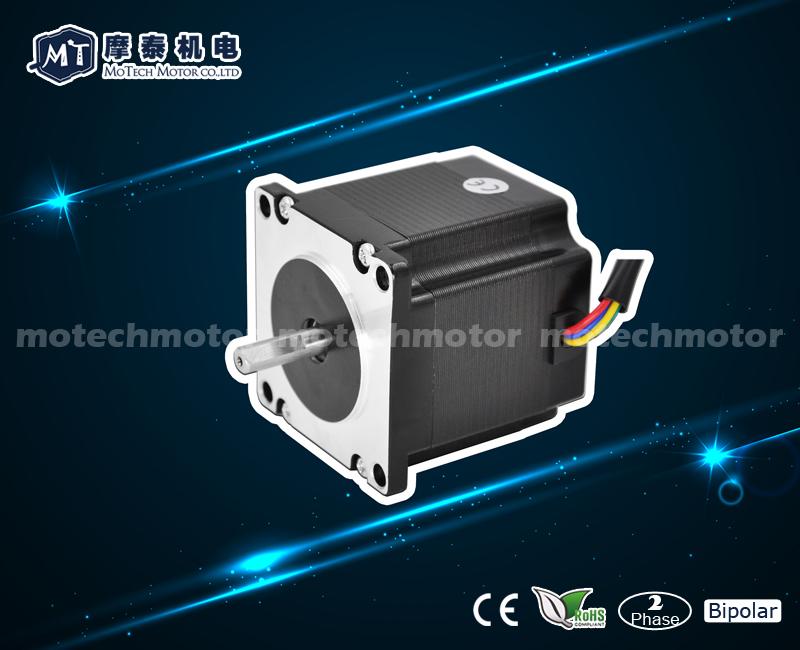
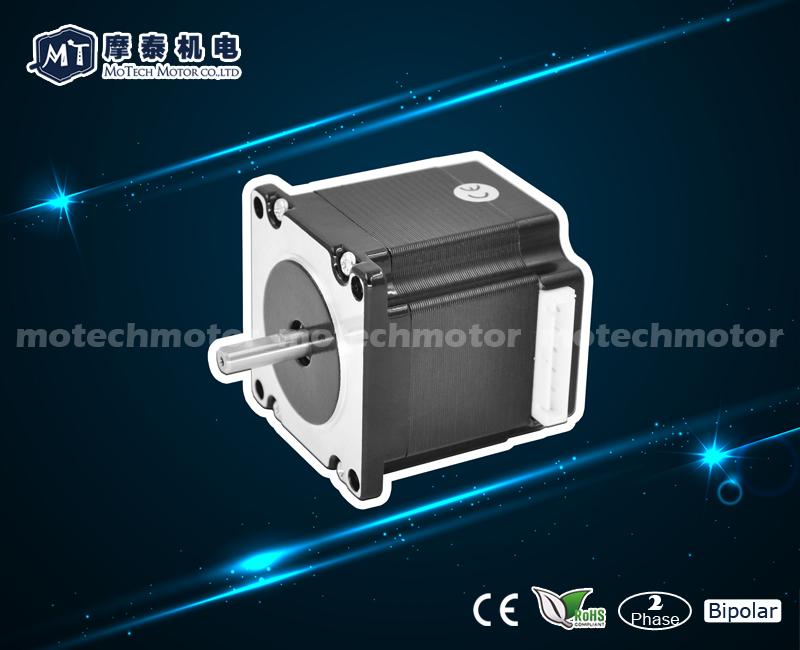
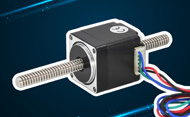
Many medical devices are becoming smaller and more integrated. Compact stepper motors, especially NEMA 8, NEMA 11, NEMA 14, and compact NEMA 17 models, are often preferred for space-limited designs.
 |
 |
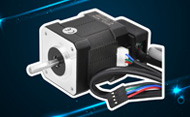 |
| NEMA 8 | NEMA 11 | NEMA 17 |
High Reliability
Medical equipment must operate consistently over long service intervals. A high-quality stepper motor should offer dependable materials, stable winding performance, and strict production consistency.
Customization Capability
Medical device manufacturers often need customized motor configurations, such as:
> special shaft dimensions
> integrated lead screws
> custom cables and connectors
> low-noise optimization
> gear reduction options
> encoder integration
> brake or driver integration
Customization is often necessary to fit the mechanical and electrical requirements of the final equipment.
Why Stepper Motors Are a Practical Choice for Medical Equipment Manufacturers
Compared with more complex motion solutions, stepper motors offer a good balance between precision, control simplicity, and cost. For many medical applications, they provide enough accuracy without unnecessarily increasing system complexity.
Their main advantages include:
> precise incremental motion
> easy electronic control
> wide range of sizes and configurations
> strong adaptability for OEM projects
> cost-effective integration in automated systems
For equipment manufacturers working on new product development, stepper motors can also help shorten the design cycle because they are relatively straightforward to integrate into controlled motion systems.
Design Considerations for Medical Device Applications
Choosing the right stepper motor is not just about torque and size. Engineers should evaluate the full application environment.
Important design considerations include:
Load and Motion Profile
The motor must match the required torque, speed, acceleration, and duty cycle of the device. Oversizing can increase cost and heat, while undersizing can affect stability.
Thermal Performance
Heat management matters in enclosed medical systems. Motor efficiency, drive mode, and operating duty all affect temperature rise.
Drive Method and Microstepping
Microstepping can help improve smoothness and reduce vibration in sensitive equipment. The driver and control method should be selected together with the motor.
Mechanical Integration
Shaft design, mounting dimensions, couplings, and lead screw assembly must fit the equipment structure precisely. Mechanical alignment plays a major role in long-term reliability.
Compliance and Quality Expectations
While the full compliance responsibility belongs to the equipment manufacturer, motor suppliers should still be able to provide stable quality control, traceability, and consistent manufacturing support.
How to Choose a Reliable Stepper Motor Supplier for Medical Equipment
For medical projects, the supplier matters almost as much as the motor itself. A reliable supplier should do more than just provide a catalog product.
Look for a partner that can offer:
> consistent product quality
> engineering communication during development
> customization support
> stable production capacity
> sample evaluation support
> long-term supply reliability
For OEM and industrial medical applications, it is also helpful to work with a manufacturer that understands precision motion requirements and can support application-based motor selection instead of offering only standard models.
Conclusion
Stepper motors play an important role in modern medical equipment. Their precision, repeatability, compact size, and flexible design options make them a valuable motion control solution for many healthcare and laboratory devices.
Whether used in infusion systems, analyzers, therapy devices, or automation platforms, the right stepper motor can improve equipment performance and support long-term reliability.
For medical equipment manufacturers, selecting a suitable motor and a dependable supplier is a key step in building efficient, accurate, and competitive products.
Looking for a stepper motor
solution for your medical equipment project?
We provide reliable stepper motors with customization options for shaft design,
cables, connectors, lead screws, gearboxes, encoders, and integrated motion
solutions for precision applications.
For
inquiries or technical support:
sales@motechmotor.com


Scan QRCode
Follow Stepper Motors, Step-Servo Motors, Stepper Drivers News
 Tel: +86-20-31060625
 Fax: +86-20-31060635
 Email:sales@motechmotor.com
 Add.:Block 15th, Tian An Hi-tech Ecologocal Park, No.555, Panyu Avenue North, Panyu distrct, Guangzhou, China (511400)